 519-491-6070
 680, Cathcart Blvd, Sarnia
 info@cathcartdental.com
General_Dentistry
What is general dentistry?
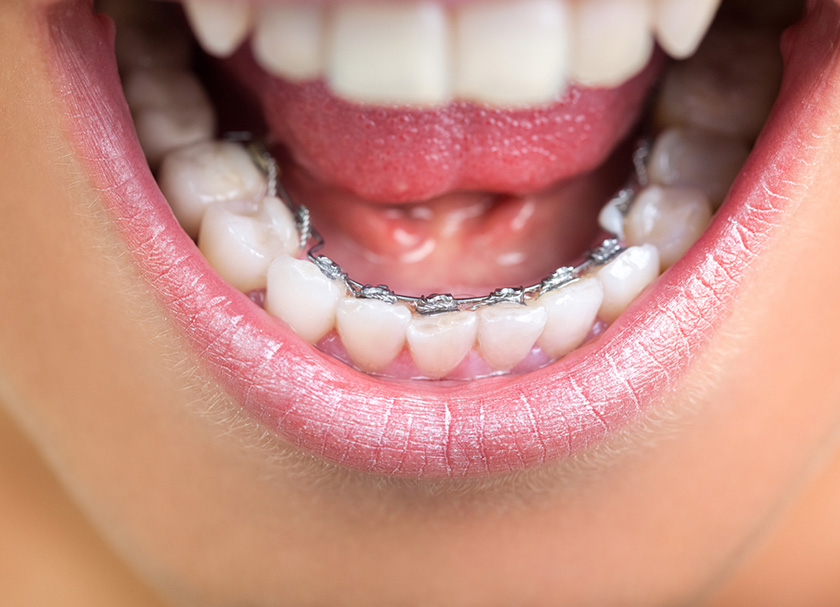
Some common reasons for choosing lingual braces include
Lingual braces are invisible to onlookers as they are placed behind the teeth. Many adults prefer lingual braces as traditional braces are not ideal for them in social and professional situations.
The discoloration or the white spots resulting from wearing braces will be on the inside of the teeth rather than the outside when compared to other dental braces.
Customizing the lingual braces according to the patient’s needs makes them more effective and comfortable than standard or conventional braces.
Who Needs the Lingual Braces Procedure?
Kids and Adults
- Because Lingual Braces leaves the roots of a tooth intact and able to grow, it’s used primarily in children with baby (primary) teeth, which have an immature root formation.
- Baby teeth help maintain spacing for the permanent teeth that will follow, so leaving them intact is often a priority.
- Studies have shown that this procedure can also be used effectively in adults and in children with secondary teeth, provided that enough healthy pulp exists within the tooth to keep it healthy and vital.

Outcome of Lingual Braces
A Lingual Braces is considered a restorative procedure. Most people who undergo the procedure can enjoy positive results for the rest of their lives. Still, how long results last depends on the way you take care of your teeth. Just as the rest of your teeth depend on good oral hygiene habits, your restored tooth requires regular brushing and flossing as well.
What are the conditions for Lingual Braces?
- Laser-assisted uvula palatoplasty (LAUP):
- Radiofrequency ablation:
- Septoplasty:
- Tonsillectomy and adenoidectomy:
Pros And Cons Of Lingual Braces

Pros

Cons


Benefits of Lingual Braces
- Compared to a traditional root canal, a Lingual Braces is a cost-effective and less invasive procedure.
- For children, it can eliminate tooth pain, inflammation, and tooth infection in a manner that can help to preserve baby teeth and reduce the spread of decay.
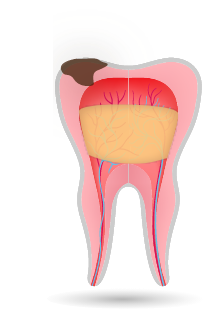

- Unlike some other dental procedures, a Lingual Braces will allow the transition from baby teeth to permanent teeth to happen naturally.
- Plus, a Lingual Braces can be completed in a single appointment.
Types Of Lingual Braces
Lingual Braces can be classified according to treatment objectives given by Ranely :
1. Primary Teeth
The indication of this Lingual Braces procedure is when pulp exposure occurs during caries removal in a primary tooth with a normal pulp or reversible pulpitis or after a traumatic pulp exposure. Then, the coronal tissue is amputated, and the remaining radicular tissue is judged to be vital without suppuration, pus, necrosis, or excessive bleeding which cannot be controlled by a moist cotton pellet (with saline) after several minutes, and there are no radiographic signs of infection or pathologic resorption.


2. Devitalization
Another form of nonchemical devitalization emerged: electrosurgical Lingual Braces. Electrocautery releases heat that denatures pulp and reduces bacterial contamination. Experimentally, electrosurgery has been shown to reduce pathologic root resorption and periapical pathology, and a series of pulpal effects including acute and chronic inflammation, swelling and diffuse necrosis. It is reported that this method has high success rate in pulpotomies.
3. Preservation
Zinc oxide-eugenol (ZOE) was the first agent to used for preservation. In recent years, glutaraldehyde has been proposed as an alternative to formocresol based on: its superior fixative properties, and low toxicity. A non aldehyde chemical, ferric sulfate, has received some attention recently as a Lingual Braces agent. It minimizes the chances for inflammation and internal resorption. This category of pulp therapy is still in flux, although major changes in the future are not likely.


4. Regeneration
The ideal Lingual Braces treatment should leave the radicular pulp alive and healthy In this case, the tooth should be filled with noxious restorative materials within, thereby diminishing the chances of internal resorption, as well as formation of reparative dentin. Calcium hydroxide was the first agent used in pulpotomies that demonstrated any capacity to induce regeneration of dentin.
Before the Procedure
Here is how to prepare:




Timing
Location
What to wear
What to bring
During the Procedure
Lingual braces are completely customized to fit the wearer’s requirements. Our orthodontists will take the impression of your teeth and design these braces to fit your mouth perfectly.
We place the brackets individually on each tooth, and the archwire connects the brackets. The archwire is also customizable, making it all the more effective.
Traditional braces have standardized brackets that are placed individually on each tooth one at a time.
Once the roof of the pulp is drilled through, it will bleed. This shows that the pulp is still healthy. If the pulp chamber is filled with pus or it’s empty and dry, then the dentist cannot continue with the Lingual Braces. They must then either perform a pulpectomy or tooth extraction. The coronal pulp will then be removed/excavated. When this is done, wet cotton swabs or pellets will be used to stop the bleeding and clean the area. Ideally, this bleeding should stop within a minute or two, or top five. Different dentists have their own time limits. If the bleeding doesn’t stop after that time then it shows that the pulp in the root is no longer healthy, and has probably been affected by tooth decay. So, a pulpectomy or a tooth extraction will have to be performed. Once the bleeding stops, then the radicular pulp (what of it can be seen) is treated and covered with special medication. This medication is usually either formocresol, ferric sulfate, or mineral trioxide aggregate (MTA). Your dentist may also opt to use laser treatment in place of medications to treat the pulp as pulpotomies done with lasers have very high success rates. After this is done, the pulp chamber of the tooth is sealed with zinc oxide eugenol (ZOE) or some other base. The tooth is then restored. This is usually done with a stainless steel crown.
Post-Procedure

Taking care after the Procedure

What are the risks or complications of Lingual Braces?



What to expect?



FAQ's
1. How long do I need to wear lingual braces?
2. How often should I go for a dental checkup after getting lingual braces?
FAQ's

3. Can only my front teeth be straightened with lingual braces?
4. Do lingual braces give the wearer a lisp?

High Quality Dental Work
That Makes You Good Look
your smile make over